From career exploration to workforce preparation.
Finding a career direction is the beginning. My Career Path connects that direction to the knowledge, skills and abilities a role requires, then helps learners plan the work of preparing for it.
Investigate occupations, income and education.
Assess requirements and plan development.
Set activities, timeframes and follow-up.
Give a career goal a development plan.
Connect the occupation, the learner’s starting point and concrete preparation activities. Return to the plan as experience and goals change.
Choose the occupation you want to prepare for.
Bring an occupation from exploration into My Career Path. Add a personal statement and make the career goal the reference point for preparation.
The shift: from “This career interests me” to “These are the requirements I need to understand.”
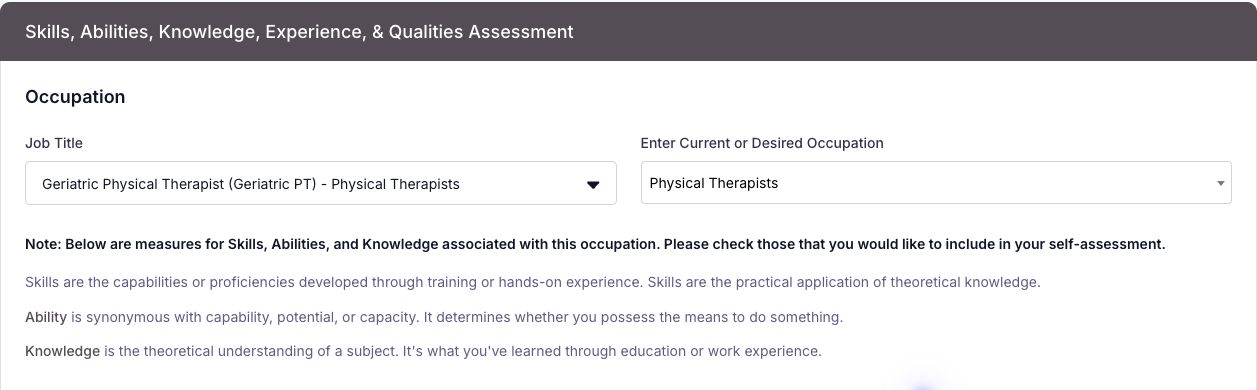
Assess against occupation-specific requirements.
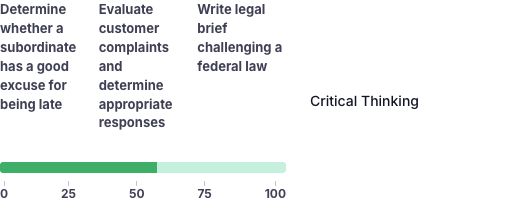
Review knowledge, skills and abilities with concrete competency examples. Use self-assessment to identify strengths and areas for development.
Example: Critical Thinking guidance describes what the skill involves, giving the learner a basis for reflection and a conversation with an educator, advisor or mentor.
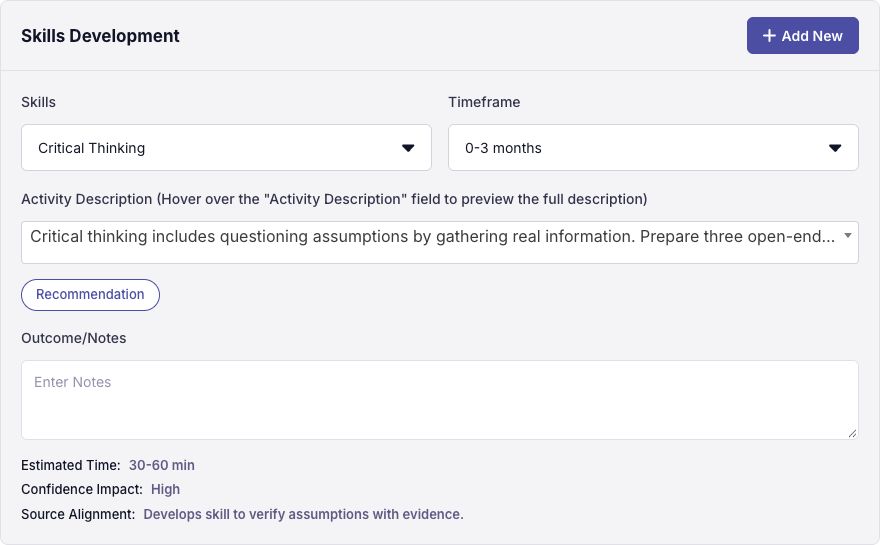
Turn a development need into an activity.
Choose an area to develop, set a timeframe and review a recommended activity. Skills Development, Ability Capacity and Knowledge Acquisition each provide a place to organize preparation.
Example: select Critical Thinking, use a zero-to-three-month timeframe, and identify an activity to work on.
Record what happened. Decide what comes next.
Return to the plan, add outcomes or notes, and revisit goals and activities. Use the record to discuss progress, adjust preparation and identify further support.
What did I work on?
What did I learn or demonstrate?
What needs more practice?
What is my next step?
Build capabilities and the support around them.
The learner dashboard brings seven areas together. Occupation, skills, abilities and knowledge anchor preparation; network, self-care and mentors keep the wider support picture visible.
Screens show the working application, with account details and personal ratings excluded. Self-assessment supports reflection and planning; it is not an independent certification of competence.