A product of Lifestyle Learning®Career exploration • Education navigation • Lifestyle realization
Career Development Intelligence · CDI

Connect the life you want to the choices you make.

Aspirations. Exploration. Development. Decisions. Alignment. Outcomes. CDI brings these six dimensions together to understand how people build a career direction and turn it into a plan.

From career information to career intelligence

Six dimensions of a career decision.

A job title is one part of the picture. CDI connects what someone wants from life, the options they investigate, the capabilities they build and the choices they put into action.

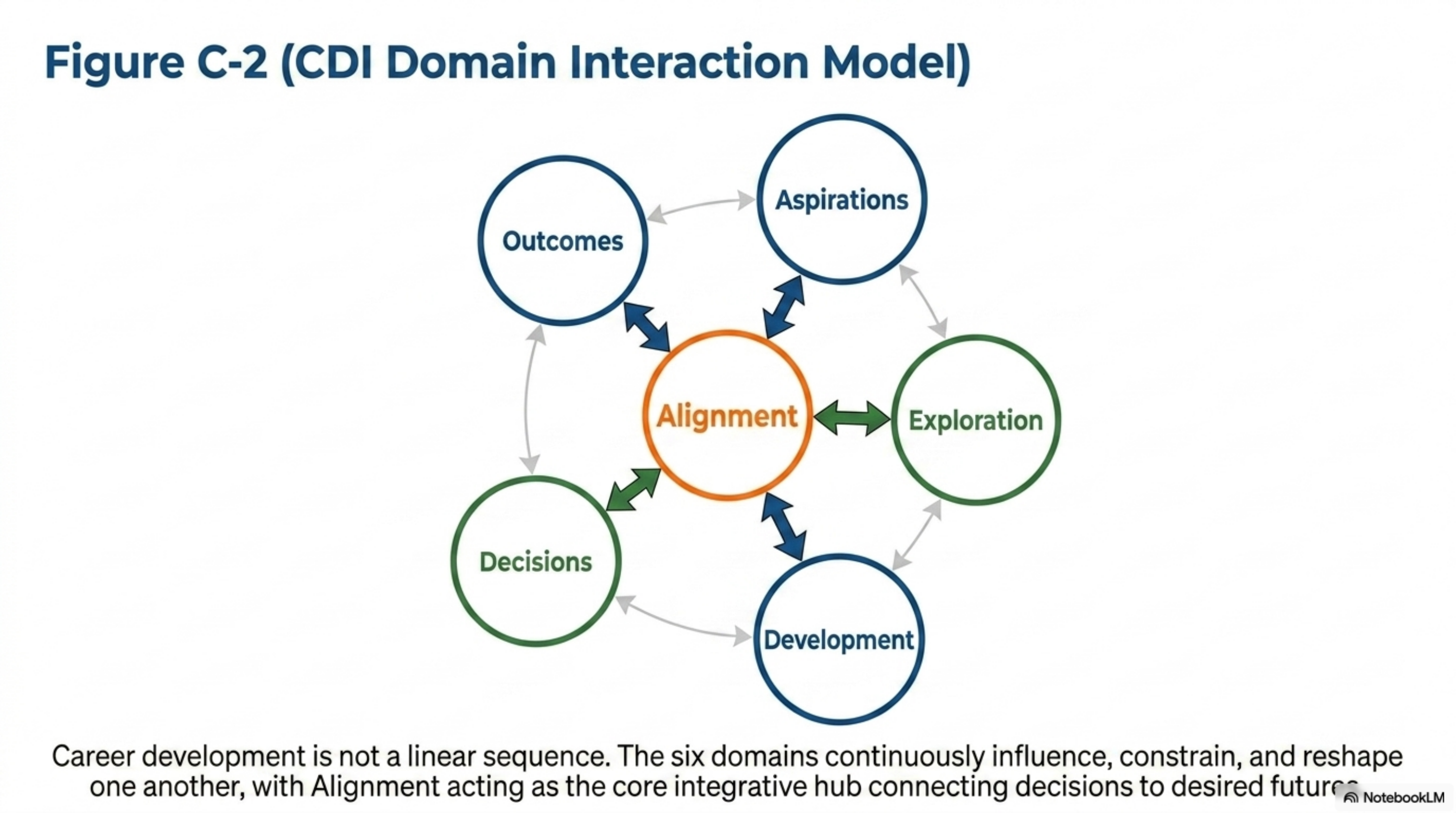
CDI Domain Interaction Model: Alignment at the center connects Aspirations, Exploration, Development, Decisions and Outcomes; links also connect the outer domains.
Domain Interaction Model, from the CDI white paper. This conceptual diagram shows relationships for study, not a required sequence or demonstrated causal pathway. Open full-size figure ↗

Six domains. Connected questions.

People revisit goals, discover alternatives and revise plans. These dimensions connect and repeat as experience grows.

Alignment is the integrative lens: it brings the domains together to examine whether a desired future, explored opportunities and preparation plans support one another.

Developed through Lifestyle Learning’s research around Career Navideer®, CDI connects activity, advising, assessments and later outcomes.

Explore the six intelligence domains

Put the framework to work.

01

Aspirational Intelligence

What future does the person want?

Lifestyle goals, economic expectations, personal priorities and desired living conditions give career choices meaning.

Start with the life you want.

Choose housing, transportation and other lifestyle priorities. Use the Lifestyle Index to discuss the income those choices would require.

Ask: What matters most, and which expectations are flexible?
02

Exploration Intelligence

How does the person investigate possibilities?

The careers, programs and alternatives a person examines reveal the process behind a stated preference.

Look beyond the familiar.

Search more than 50,000 supported job titles, investigate occupation reports and compare education and training routes.

Ask: What did you discover that you had not considered before?

03

Developmental Intelligence

What capabilities are being developed?

Skills, confidence and preparation influence which options a person can pursue and what support they need next.

Identify what you need to build.

Use occupation-specific self-assessment and My Career Path to identify skills, development activities and next steps.

Ask: What can you do now, and what needs practice or preparation?

04

Decision Intelligence

How do possibilities become choices?

Preferences can be compared, narrowed, reconsidered or translated into plans. CDI examines that process rather than only the final job title.

Compare options and choose a next step.

Weigh occupations and preparation routes, save goals and set timelines in My Career Path. Revisit the choice as you learn more.

Ask: Why this option, and what will you do next?

05

Alignment Intelligence

How do the parts fit together?

This integrative domain examines coherence and tension among aspirations, career possibilities, preparation, context and intended outcomes.

Check whether the pieces fit.

Compare lifestyle income needs with occupational earnings, preparation requirements and the time and resources available.

Ask: Does this route support your priorities, and what tradeoffs need attention?

06

Outcome Intelligence

What happens later?

Education, training and work experiences show what followed a choice. Those experiences can reshape goals and the next decision.

Follow what happens next.

Revisit the plan as education, training and work unfold. Longer-term research links earlier choices to later attainment, employment and earnings when follow-up records are available.

Ask: What happened, what changed, and what should the next plan take into account?

The domains are related evidence categories, not six validated scales or a single CDI score. Their empirical maturity differs, and interpretation depends on the measures and study design.

The connection across domains

Alignment makes the relationships visible.

A person may know what career they want without knowing whether its income, preparation and daily work support the life they hope to build. Alignment brings those connections into the conversation before the next commitment.

Alignment connects the future, the options and the route.
The life I wantPriorities · lifestyle · income needs
The careers I exploreDaily work · earnings · possibilities
The route I can takeSkills · education · time · resources

Revisit any part as you discover more or circumstances change.

A question for a person, not a verdict about a person.

An apparent gap can prompt a closer look at alternatives, a different preparation route or an advising conversation. Alignment is not presented as a validated fit score, an automated prescription or a guarantee of success.

Discover · Evaluate · Execute

Different decisions call for different experiences.

CDI distinguishes the work of discovering possibilities, evaluating fit and executing a plan. Career Navideer’s audience-specific experiences put that distinction into practice: discovery in middle school, comparison in high school, and practical transitions for adults.

MIDDLE SCHOOL · DISCOVER

The Discoverer

“What could I become?”

Broaden what feels possible.

The decision task: express preferences, encounter unfamiliar careers and begin connecting everyday choices to a future life.

What CDI brings into focus
Aspirations and breadth of exploration. Returning to new possibilities can be meaningful before a learner is ready to narrow them.
How Career Navideer facilitates it
Lifestyle choices, career discovery, interactive decision games and grade-level activities make exploration concrete and engaging.
The next conversation
“What surprised you? What would you like to explore next?”
Explore the middle-school experience →
HIGH SCHOOL · EVALUATE

The Evaluator

“Which options fit, and what will they require?”

Turn possibilities into informed choices.

The decision task: compare occupations, weigh tradeoffs and connect an emerging direction to courses, CTE and further education.

What CDI brings into focus
Comparison, reconsideration and alignment. Refining a choice matters as much as selecting one.
How Career Navideer facilitates it
Career reports connect work and earnings to preparation. Education navigation and My Career Path connect options to courses, programs and development needs.
The next conversation
“Why does this option fit, and what preparation should you begin?”
Explore the high-school experience →
ADULT LEARNERS · EXECUTE

The Executor

“How can I make this transition work?”

Build a route around real responsibilities.

The decision task: connect prior experience and a target role to income needs, time, training costs and feasible next steps.

What CDI brings into focus
Focused investigation, preparation gaps and pathway planning. A short, targeted session can serve a different purpose from broad discovery.
How Career Navideer facilitates it
Direct occupation search supports over 50,000 job titles. Program and institution information, competency self-assessment and My Career Path help organize preparation.
The next conversation
“What can you build on, what must you develop, and what can you do next?”
Explore the adult-learner experience →
CDI explains the decision process. Career Navideer supports the work.

Audience-specific versions and institutional configuration can emphasize the tools, activities and guidance that fit the learners. Educators and advisors can adapt the starting point and sequence as needs change.

DiscoverEvaluateExecute

These are emphases, not age limits. An adult may need discovery; a student may be ready to act. New information can send anyone back to exploration.

Adapted from the October 2026 presentation series, including The Wayfinder’s Trail and Mapping Career Decisions. These describe patterns of decision-making, not personality types, validated readiness levels or a required sequence. A person may use more than one pattern.

Alignment in a real decision

“I like this career. Can I build the life I want?”

An illustrative example: a learner likes an occupation but finds that its typical earnings fall below the income their lifestyle choices require.

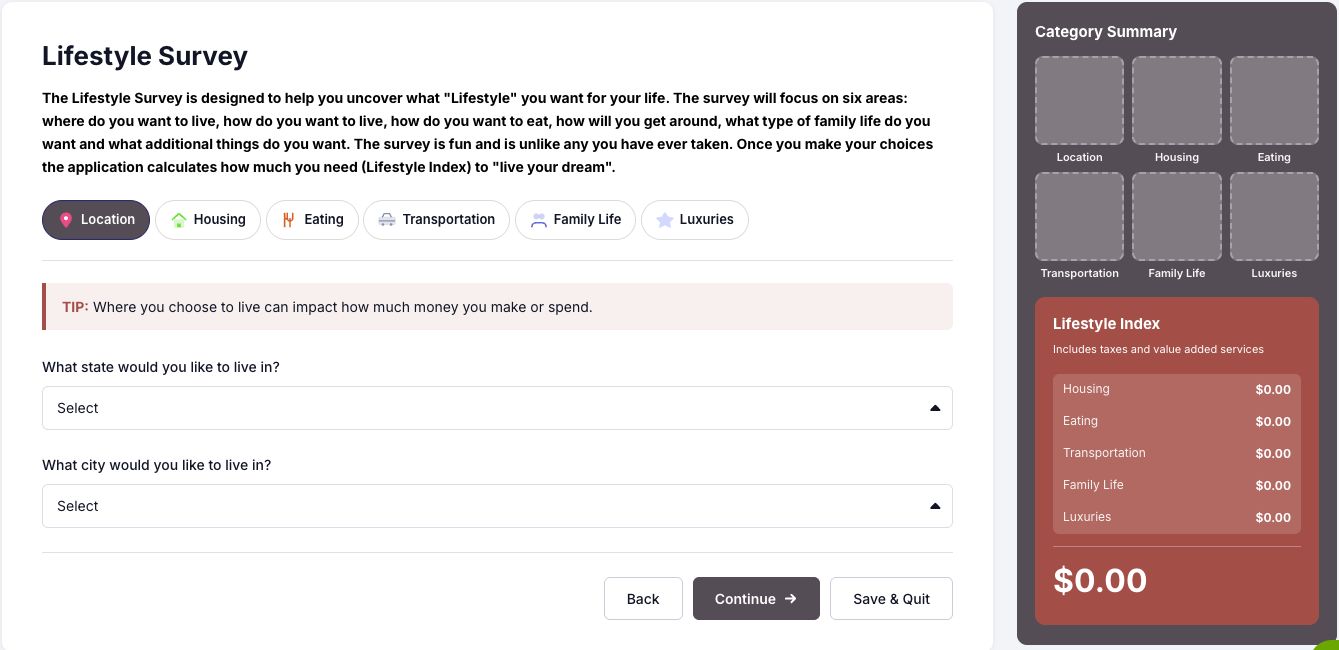
Career Navideer Lifestyle Survey showing choices that inform lifestyle income needs
Make the aspiration concrete. Start with lifestyle choices.
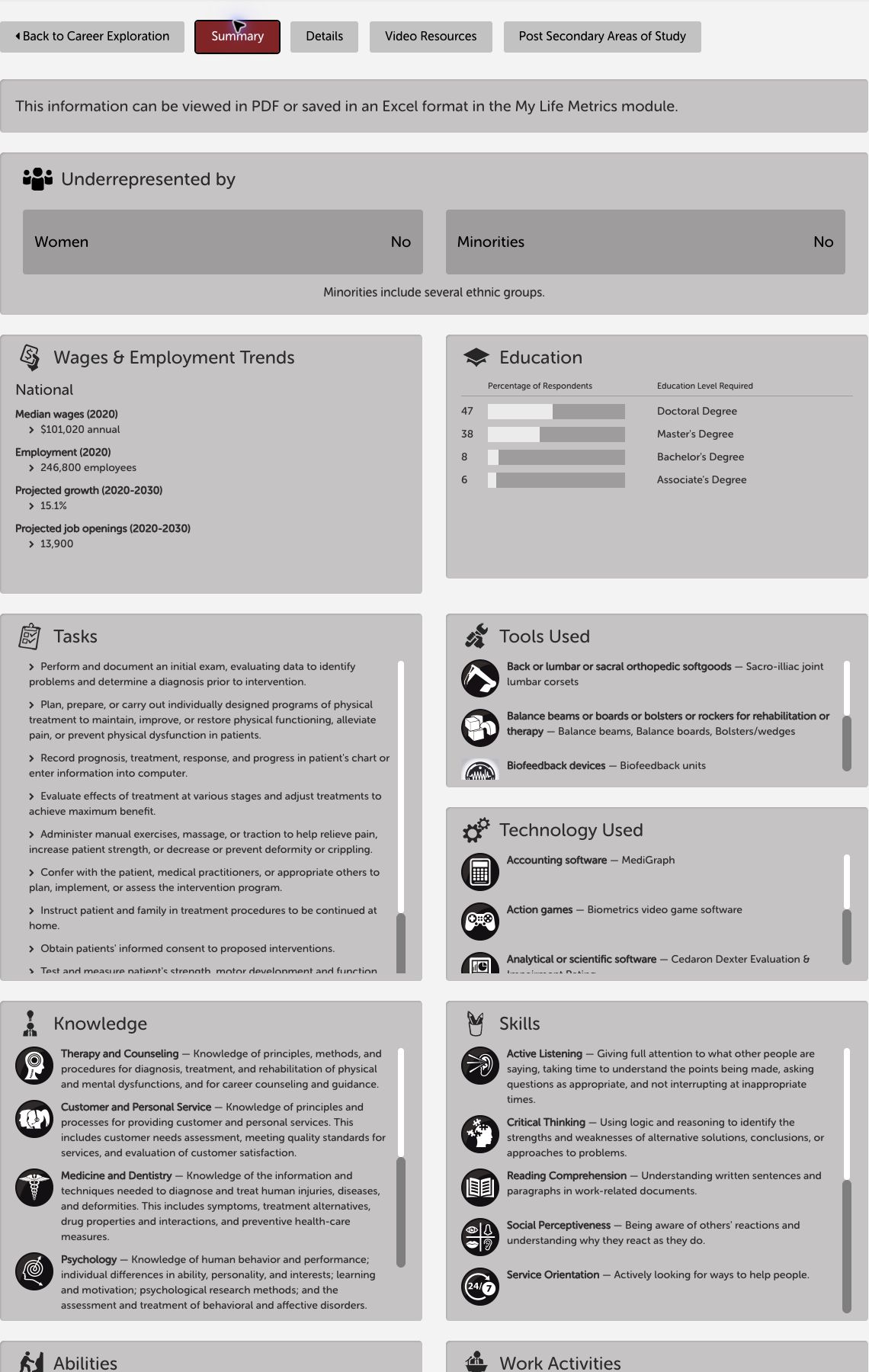
Original Career Navideer occupation Summary report preview
Investigate a possibility. Compare occupational information.

Revisit the aspiration

Which lifestyle priorities are essential? Which can change? The gap makes expectations concrete enough to discuss.

Broaden the exploration

Investigate related occupations, work settings and preparation routes. Compare the daily work as well as earnings.

Develop a workable plan

Identify education, skills, time and costs. Save a next step in My Career Path and revisit it as circumstances change.

The framework connects these choices; it does not choose a career for the learner or guarantee an outcome.

See My Career Path →
What the research means in practice

Different life stages. Different starting points.

The Observatory findings show strong reported discovery among school-age respondents and different activity patterns among adults. CDI puts those differences in context; Career Navideer supports the learner’s purpose rather than treating one pattern of use as the goal for everyone.

School-age learners at different stages of their education
Discover possibilities. Connect them to preparation.
A chef at work, from the Career Navideer adult-learner introduction
Bring experience and real-life priorities into the next move.
Middle school

81.2% reported discovering unfamiliar careers.

89.9% wanted Career Navideer available at school.

High school

79.4% reported discovering unfamiliar careers.

76.1% wanted school access. Discovery remains relevant as learners begin evaluating options.

Adult learners

A different pattern of use.

5.8% were in the substantial-time category, compared with 29.9% of middle-school and 19.8% of high-school users. Duration alone does not explain the purpose or value of a session.

One observable differenceLifestyle-survey completion across life stages
Middle school
66.8%
High school
61.4%
Adults
20.8%

Share of each Observatory v7 group completing the survey. Descriptive platform use, not a measure of decision quality. Group populations: 2,784 middle-school, 791 high-school and 3,110 adult users.

The finding is a difference in use, not a ranking of learners.

School-age users completed the lifestyle survey more often and recorded more time. Different settings, facilitation and goals may contribute; these figures do not rank career decision-making or value gained.

Research to practice: The support suggestions are informed by the patterns, not tested intervention effects.

Source and scope: Historical Career Navideer Intelligence Observatory v7. Group populations: middle school 2,784; high school 791; adults 3,110. Group counts are not survey-item response counts. Item denominators, the substantial-time threshold and comparable adult discovery responses are not supplied in the snapshot. These descriptive groups are not matched cohorts or evidence that age caused the differences.

Adult learner context and an individual voice
Adult learner opportunity37.6 million

working-age Americans have attended college but have not earned a credential.

1 million+returned to higher education in 2023–24.
National Student Clearinghouse, 2025

“There are a lot of career options I still don't know about...so many more opportunities to re-invent and learn!”

Adult Student, published by Lifestyle Learning®

Individual feedback; not a representative survey result.

The national figures are context, not outcomes from the Career Navideer research population.

Research example · Participant feedback · Observatory v7

Exploration and decisions, in participants’ own reports.

In a snapshot of 7,070 user records, respondents reported discovering careers, support with decisions and interest in school access. Each finding below shows its own response count.

80.8% reported career discovery

1,138 of 1,408 responses said they learned about careers they did not know before.

79.8% reported decision support

1,050 of 1,316 responses said the experience helped with academic or career decisions.

84.2% wanted school access

1,137 of 1,350 comparable responses supported having Career Navideer® available at school.

Source and scope

Career Navideer Intelligence Observatory v7, Lifestyle Learning®. This historical snapshot describes participant feedback. Response counts vary by item and do not represent all 7,070 users. The findings do not establish learning gains, decision quality or causal impact; collection dates and sampling details are not specified.

Aspirations and decision refinement

Expectations become visible. Choices can change.

$115,049 median Lifestyle Index

Among 2,993 users with a completed, non-zero index in Observatory v7. The estimate makes lifestyle income expectations concrete enough to compare with career possibilities.

A historical lifestyle-cost estimate; distinct from later white-paper populations.

44.3% changed or refined a choice

230 of 519 responses reported reconsidering a career choice. CDI recognizes refinement as part of developing a direction.

Self-reported refinement does not establish decision quality or later outcomes.

Research behind the framework

Grounded in evidence. Developed through inquiry.

The white paper defines CDI’s six connected domains and the research needed to test their relationships. The participant findings on this page illustrate aspirations, exploration and decision refinement; they do not establish causal or long-term effects.

Evidence maturity and research priorities
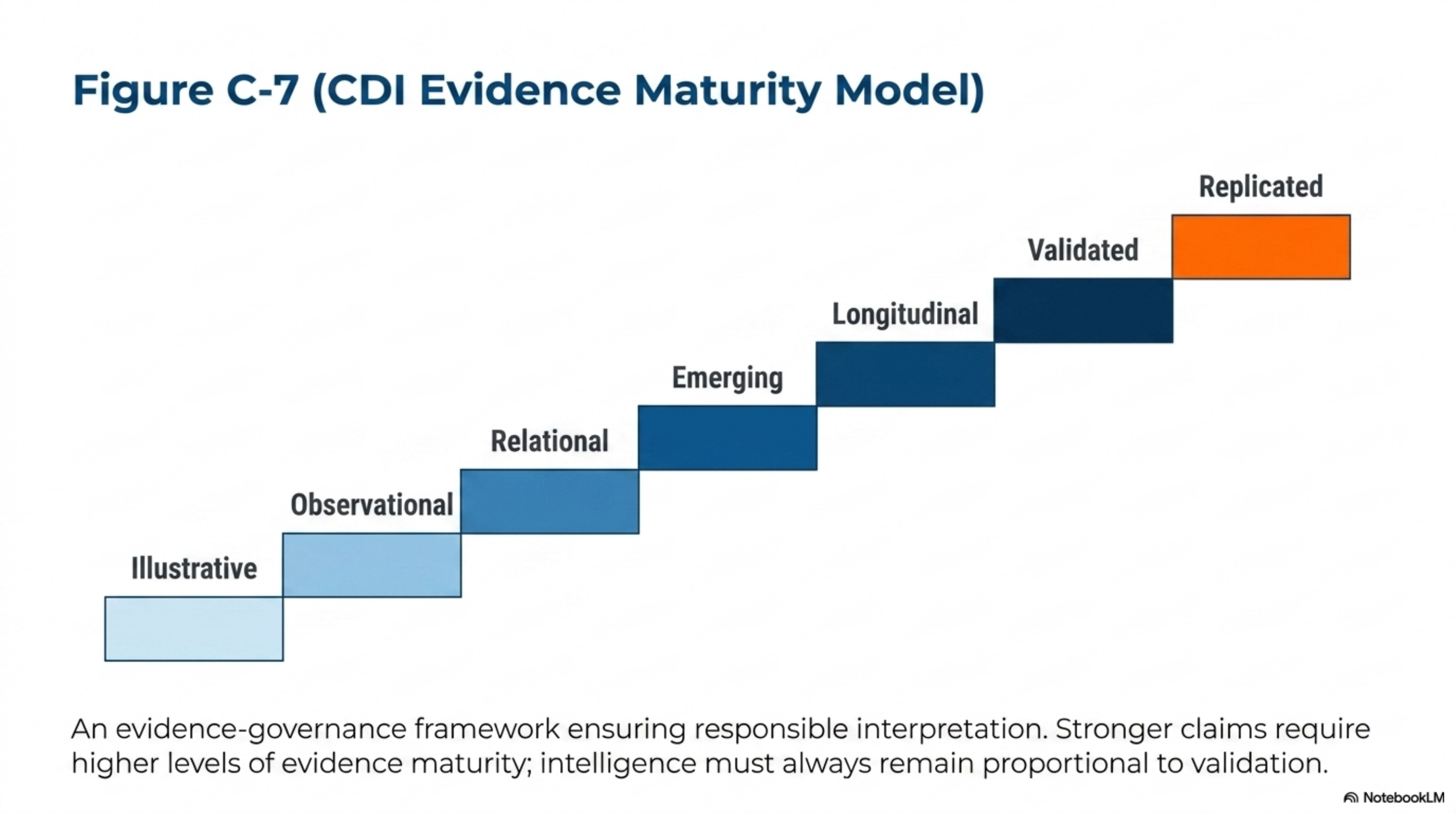
CDI Evidence Maturity Model showing proposed evidence stages: Illustrative, Observational, Relational, Emerging, Longitudinal, Validated and Replicated.
Evidence Maturity Model, from the CDI white paper. A proposed roadmap for stronger evidence, not a claim that CDI has completed every stage.

Research priorities

  • Measure carefully: define indicators, populations, response counts and linkage rules.
  • Study relationships: examine aspirations, exploration, developmental measures and decisions together.
  • Follow change over time: link the process to later education and workforce outcomes.
  • Test across settings: replicate findings across populations and implementations.
  • Evaluate responsibly: examine fairness, privacy, usefulness and unintended consequences.

Current materials support conceptual development and descriptive research examples. They do not establish predictive accuracy, causal effectiveness or long-term impact. Those are questions for further study.

From aspirations to a next step

Bring the framework into your career conversations.

See Career Navideer in action →